
Whiskey vs. Wine: How to Properly Store Your Bottles
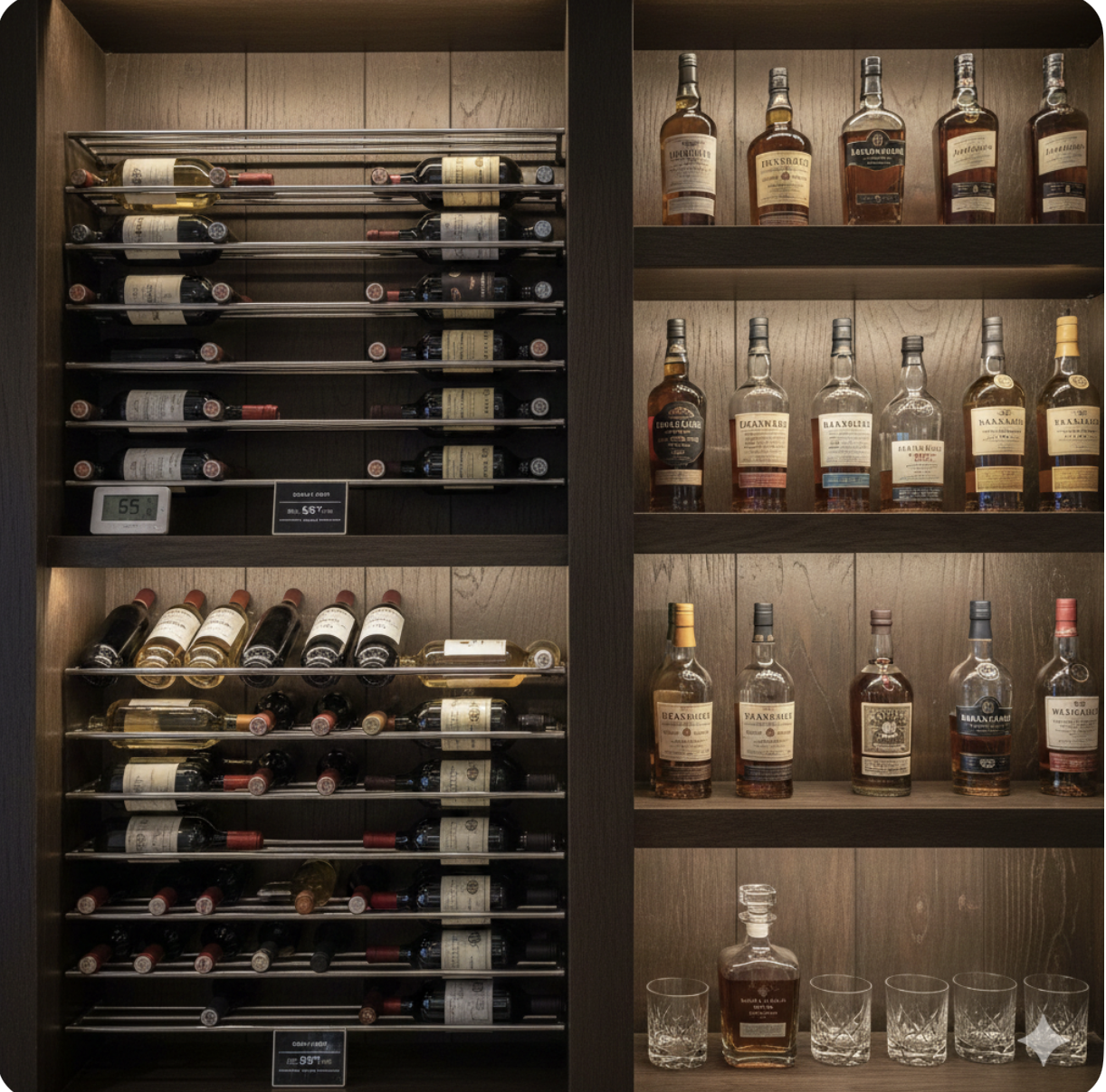
When it comes to enjoying a good glass of something strong, whether it’s a rich Cabernet or an aged Bourbon, the ritual is half the fun. But if you’re holding onto a bottle for a special occasion, you need to know the basic differences in storage between these two popular drinks. Believe it or not, the ideal home for your wine is completely different from where your favorite whiskey will thrive. Let’s break down the storage essentials for these two distinct spirits.
Alcohol Proof: The Great Divide
The biggest difference comes down to the alcohol content, or proof.
• Whiskey is a distilled spirit, meaning its alcohol volume is high, typically 40% ABV (80 proof) or higher.
• Wine is fermented, not distilled, and usually falls between 10% and 15% ABV.
This higher alcohol proof is what makes whiskey incredibly stable and gives it an indefinite shelf life when unopened. Once bottled, the spirit’s aging process stops completely. Think about those incredible vintage finds… Bourbon produced decades ago, if sealed, remains the same spirit today.
Wine, on the other hand, is a living, breathing thing. It is meant to evolve, and its lower proof means it is far more vulnerable to its environment.
Shelf Life: Open vs. Unopened
Unopened:
• Whiskey: Store it well, and it will last indefinitely. It does not age or “improve” once it leaves the barrel and enters the bottle.
• Wine: This depends on the specific bottle. Most everyday wines should be consumed within a few years, though fine wines are designed to age for decades.
Opened:
• Whiskey: Once the seal is broken and oxygen enters, oxidation begins. While it remains safe to drink for years, the flavor profile will slowly dull. Many experts suggest finishing a bottle within 1 to 2 years. To slow oxidation, you can transfer the liquid to a smaller decanter or bottle once it is half-empty to reduce air exposure.
• Wine: Due to low proof and complex chemistry, wine oxidizes rapidly. Most standard bottles are best enjoyed within 3 to 5 days. You need a vacuum seal or a preservation system to extend this window, though fortified wines like Port can last a few weeks.
Best Practices: The Storage Rules
This is where the storage instructions completely diverge.
For Whiskey:
• Keep it Upright: Always store whiskey bottles vertically. The high alcohol content can gradually degrade a natural cork if they are in constant contact, which could spoil the spirit. Simply flip the bottle once every few months to briefly moisten the cork.
• Avoid Direct Sunlight and Heat: Sunlight breaks down complex compounds and fades the spirit’s color. Store it in a cool, dark place like a cabinet, far from windows or radiators.
• Consistent Temperature: Aim for a moderate, steady room temperature, ideally between 59°F and 68°F.
For Wine:
• Store it Horizontally: Wines with natural corks should be stored on their side. This keeps the cork moist, preventing it from shrinking and allowing air to seep in. (Screw-cap wines are fine to stand upright).
• Maintain Consistent, Cool Temperatures: Stability is crucial. The ideal long-term temperature is around 55°F. Avoid dramatic swings, which can cause the cork to move and let oxygen in.
• Humidity Matters: Aim for a humidity level of about 60% to 70% to prevent the cork from drying out from the outside.
• Keep it Dark and Still: Wine is sensitive to UV light and vibrations. Store it in a dark area away from heavy appliances that might disturb the sediment.
In short, your wine is a delicate guest that needs a dark, cool, humid, and quiet room, lying down for a rest. Your whiskey, however, is a seasoned traveler, perfectly happy to stand tall in a cabinet at room temperature, as long as it’s away from the sun.

Leave a Reply
Become an insider and receive weekly advice, tips, and insight on all things whiskey
.
Weekly tips, reviews and recommendations to help you enjoy whiskey life to the fullest.
JOIN THE LIST

Sippin' With Jordan Davis
sippin' with the stars

Million Dollar Cowboy Bar WY
old fashioned aF

5 Steps To Sip and Savor Whiskey
whiskey 101

COMMENTS