
The Different Categories of Bourbon
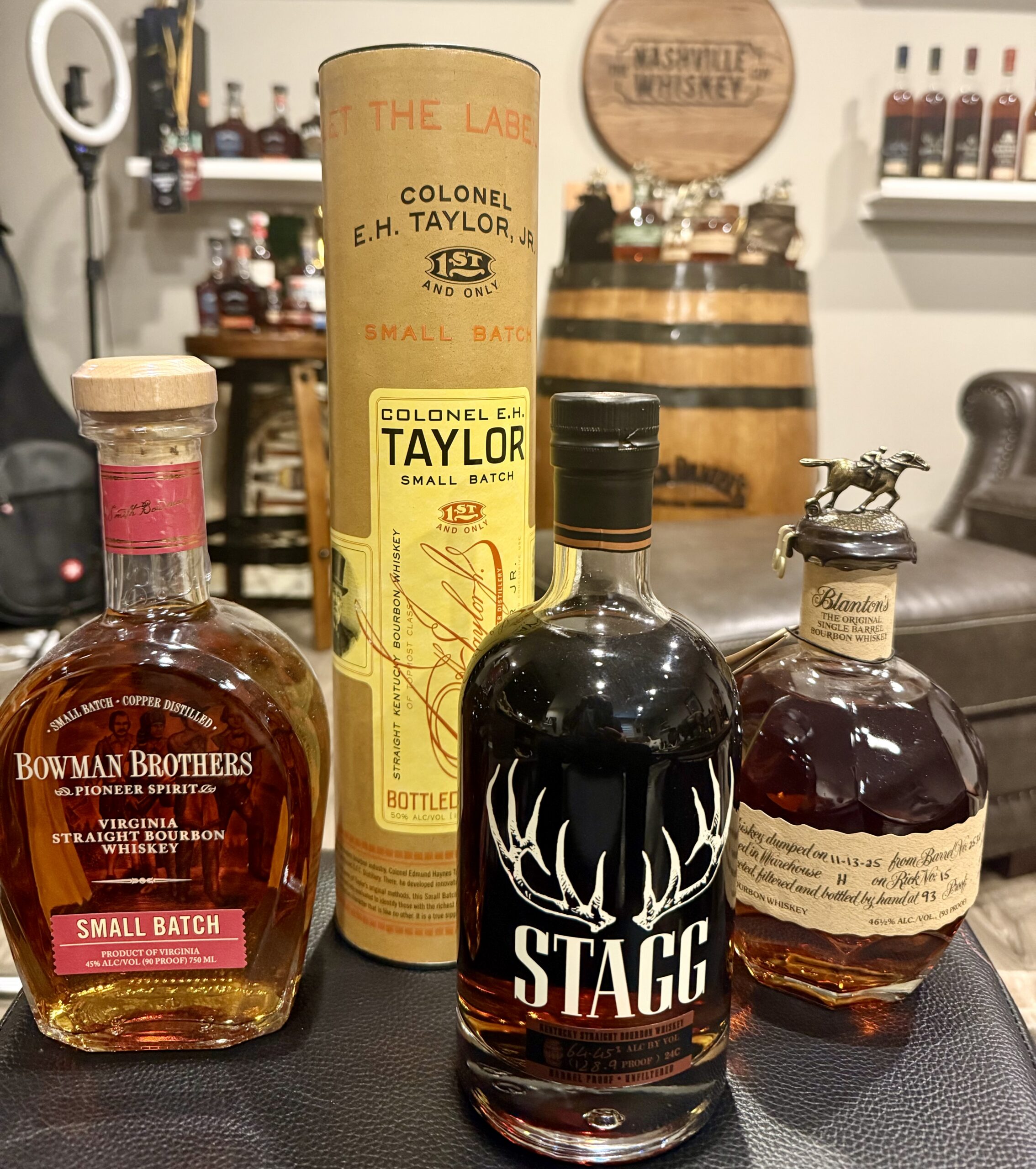
I recently had an individual reach out, confused by all the bourbon terminology. It’s true, navigating the world of bourbon can feel a bit like reading a chemistry textbook. While all bourbon must be made in the U.S. from at least 51% corn and aged in new charred oak containers, the labels tell you exactly how that specific liquid was handled. Let’s see if I can break it down for you. Here are the primary categories and terms you’ll run into:
1. Production Standards (The Legal Labels)
These terms are regulated by the TTB (Alcohol and Tobacco Tax and Trade Bureau) and tell you how the whiskey was made and aged.
- Straight Bourbon: This has been aged for at least two years and contains no added colors or flavors. If it’s aged less than four years, it must have an age statement on the bottle.
- Bottled-in-Bond (BIB): The “gold standard” for transparency. It must be the product of one distillation season, by one distiller, at one distillery. It must be aged in a federally bonded warehouse for at least four years and bottled at exactly 100 proof (50% ABV).
- Kentucky Straight Bourbon: If it has the state name, it must be distilled and aged in Kentucky for at least one year.
2. Barrel Selection & Blending
This describes how the distiller picked the barrels for the final bottle.
- Single Barrel: Every drop in that bottle came from one specific barrel. This is for the purists who enjoy the unique “fingerprint” of a cask, as no two barrels taste exactly the same.
- Small Batch: There is no legal limit on what “small” means, but it implies the distiller blended a hand-selected group of barrels (usually between 10 to 100) to create a specific, consistent flavor profile.
- Blended Bourbon: A bit of a rarity in high-end circles, this can contain “neutral grain spirits” or other colorings/flavorings, provided it is at least 51% straight bourbon.
3. Proof and Strength
This tells you how much water was added (or not added) before bottling.
- Barrel Proof / Cask Strength: No water was added after the bourbon left the barrel. You are drinking it exactly as it came out of the wood. These are high-octane and high flavor.
- Full Proof: This is slightly different. “Full proof” means the bourbon was bottled at the same proof it had when it entered the barrel (usually 114 or 125 proof). Some water may be added to bring it back down to that entry point if it got stronger during aging.
- Standard Proof: Most common bourbons are diluted with water to a consistent 80, 90, or 101 proof to make them more approachable.
4. Specialty Finishes
- Double Oaked / Toasted: After initial aging, the bourbon is moved into a second new charred oak barrel (or a toasted one) to extract even more vanilla, caramel, and wood sugars.
- Finished Bourbon: The bourbon is put into a secondary cask that previously held something else—like Sherry, Port, or Cognac—to pick up those fruity or nutty notes.
So, keep this as a reference. Read the labels. Learn the terms. I promise I’ll make that bourbon aisle less intimidating and easier to understand.

Leave a Reply
Become an insider and receive weekly advice, tips, and insight on all things whiskey
.
Weekly tips, reviews and recommendations to help you enjoy whiskey life to the fullest.
JOIN THE LIST

Sippin' With Jordan Davis
sippin' with the stars

Million Dollar Cowboy Bar WY
old fashioned aF

5 Steps To Sip and Savor Whiskey
whiskey 101

COMMENTS