
Why Charred Barrels Change Bourbon Flavor
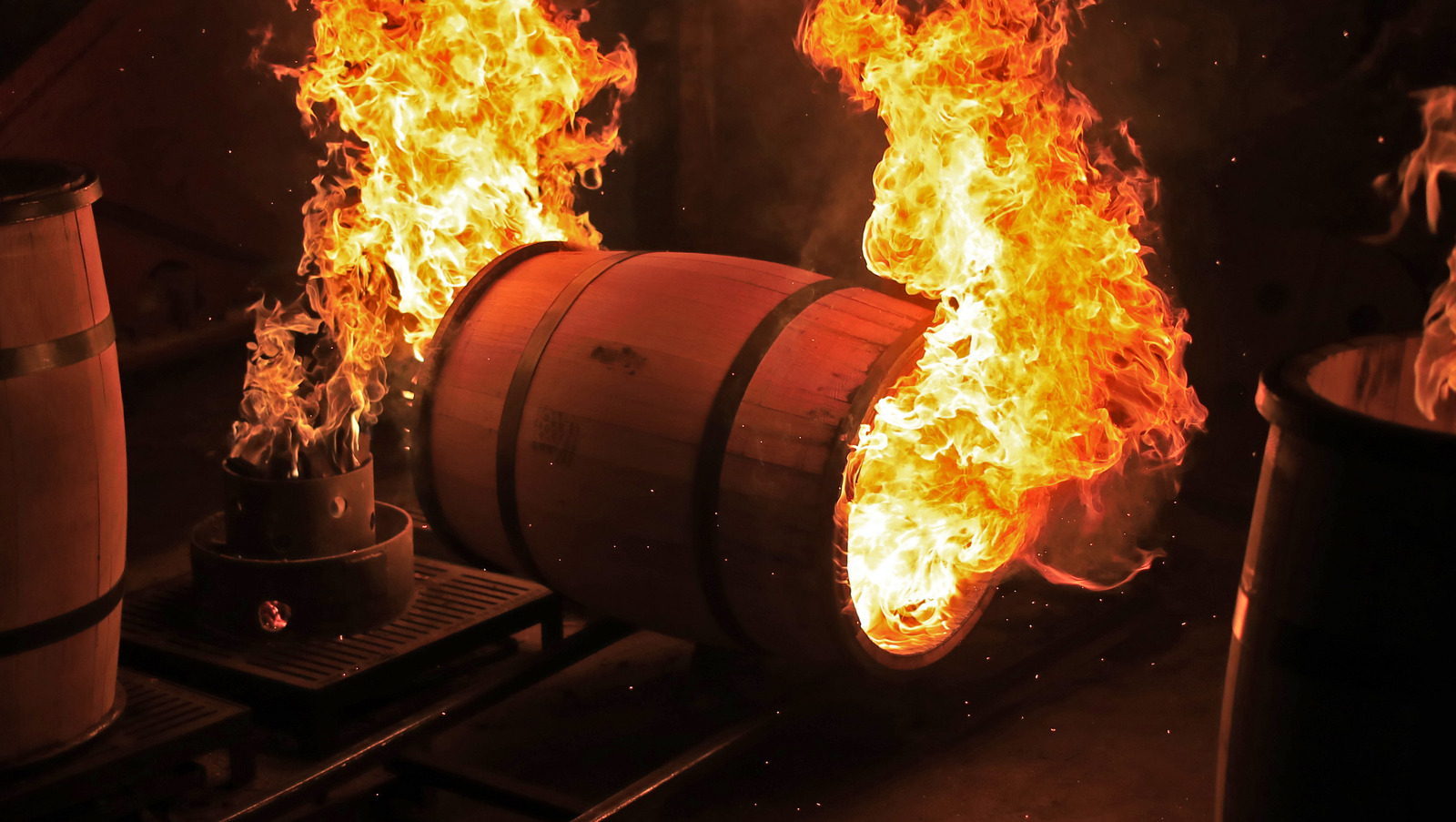
If you have ever wondered why bourbon tastes like vanilla and caramel instead of harsh grain, the answer goes back thousands of years and a series of unexpected discoveries. A charred oak barrel is required for bourbon, but the way whiskey and barrels came together was never part of a grand plan. It was shaped by practicality, experimentation, and a bit of luck.
Long before barrels were used, people relied on clay pots to store and transport liquids. They worked well enough until they broke, which they often did. Everything changed when Celtic tribes in what is now France figured out how to shape wood into curved staves and secure them with metal hoops. The result was a container that could handle rough travel and was surprisingly easy to move. Instead of carrying heavy vessels, a single person could roll a full barrel across the ground.
When the Romans saw how useful these wooden barrels were, they quickly adopted them. At that point, no one was thinking about aging anything. The goal was simply to get wine or beer from one place to another. Over time, though, people began to notice something interesting. Liquids that sat in barrels for a while started to taste better. That discovery laid the groundwork for what would eventually become whiskey aging.
The charred interior of a barrel, the part that gives bourbon its color and signature flavor, is where the story becomes less clear. There is a popular legend that points to a Baptist preacher named Elijah Craig. The story says that in the late 1700s, a fire scorched some of his barrels, and instead of wasting them, he used them anyway. When he later opened those barrels, the whiskey inside had transformed into something smoother, richer, and slightly sweet.
It is a great story, and it is widely told, but historians suggest it was probably not a single moment or a single person. More likely, charring barrels developed gradually. Some distillers may have burned the inside of barrels simply to clean them, especially if they had previously held strong-smelling contents like fish or vinegar. Others may have used barrels that once stored sugar, where heat would have caramelized the leftover residue and influenced the flavor.
While Elijah Craig is often credited in popular culture, he was not alone in shaping early bourbon history. Evan Williams, for example, is known for opening one of the first commercial distilleries in Kentucky, yet his name is not tied to the charred barrel story in the same way. There is also a deeper layer to this history that is only now receiving more attention. Much of the hands on work and technical refinement in early distilling was done by enslaved people, whose knowledge and skill played a major role in shaping what bourbon would become.
There is also a practical reason oak became the wood of choice. Oak has a natural structure that makes it watertight, thanks to compounds that seal the wood at a cellular level. Without that quality, barrels would leak, and whiskey aging as we know it would not exist. Beyond structure, oak also contributes flavor. When it is exposed to heat, the wood breaks down in a way that releases compounds responsible for notes like vanilla, caramel, and spice.
There are plenty of stories about how barrel charring began, and distilleries have never shied away from sharing the version that best fits their brand. The truth is, no one can say with complete certainty who started it or exactly how it evolved. What we do know is that this simple act of burning the inside of a barrel changed whiskey forever. And honestly, that is the part worth appreciating every time you take a sip.

COMMENTS
Leave a Reply
Become an insider and receive weekly advice, tips, and insight on all things whiskey
.
Weekly tips, reviews and recommendations to help you enjoy whiskey life to the fullest.
JOIN THE LIST

Sippin' With Jordan Davis
sippin' with the stars

Million Dollar Cowboy Bar WY
old fashioned aF

5 Steps To Sip and Savor Whiskey
whiskey 101

https://shorturl.fm/MSZFm